This post may contain affiliate links. I may receive commissions for purchases made through these links with no extra cost to you. See full disclosure.
A Printable Pirate Scavenger Hunt For Classroom: Fun Learning Activities
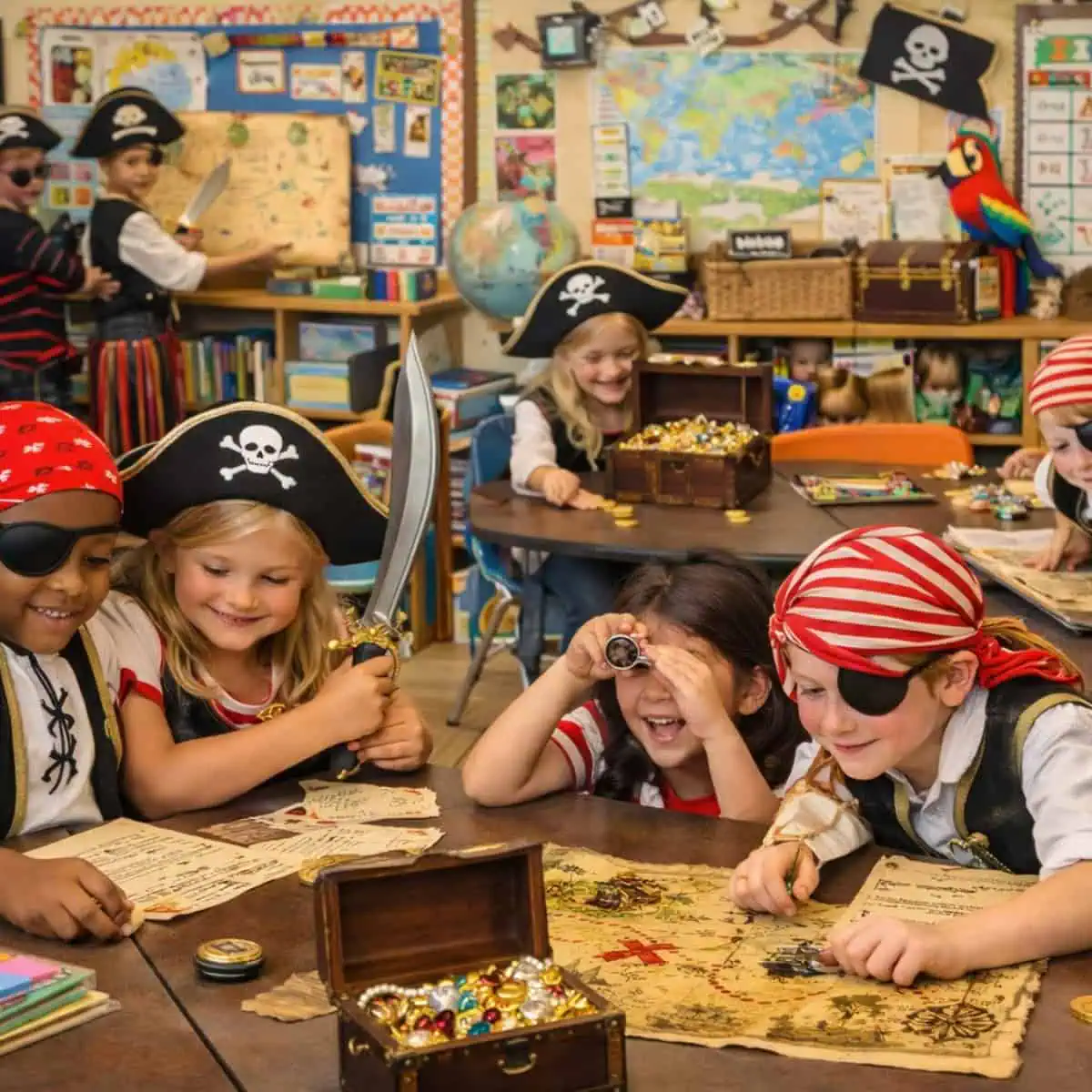
Pirate scavenger hunts bring excitement and adventure into any classroom. These printable games turn ordinary lessons into treasure-filled quests that get students moving, thinking, and working together. We’ve seen how a simple pirate theme can transform a regular school day into something students talk about for weeks.

A printable pirate scavenger hunt is a fun way to teach reading skills, build teamwork, and keep students engaged while they search for hidden treasure around your classroom. The great idea behind these activities is that they work for almost any subject. You can hide clues that teach math facts, spelling words, or science concepts while students enjoy the adventure.
We’re sharing creative ways to use pirate scavenger hunts that go beyond basic treasure hunting. From adapting the game for different ages to connecting it with your regular lessons, these ideas help you get the most out of this versatile classroom tool. Your students will practice important skills without even realizing they’re learning.
Benefits of a Printable Pirate Scavenger Hunt in the Classroom
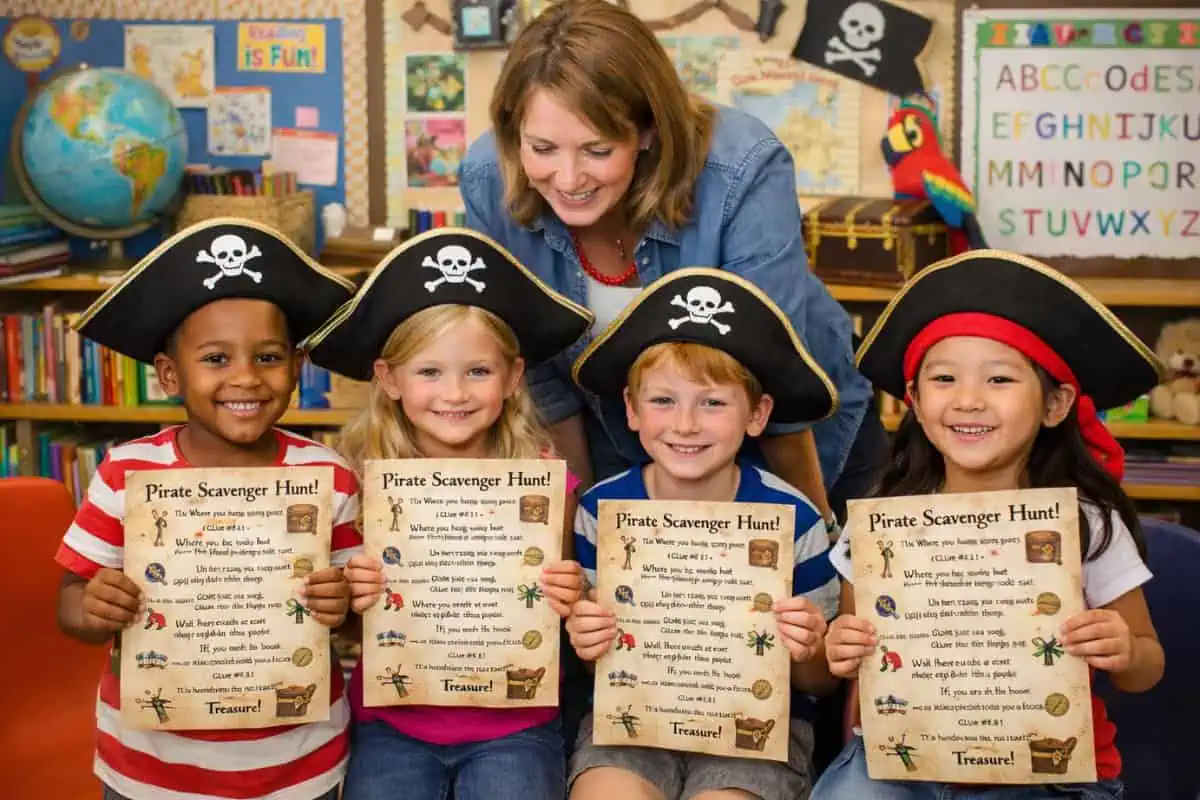
Using a pirate scavenger hunt in our classroom helps students develop important thinking and teamwork abilities while having much fun. These activities give kids a break from screens and help them practice skills they’ll use throughout their lives.
Encouraging Critical Thinking
Pirate scavenger hunts push students to analyze clues and make connections between different pieces of information. When kids read a riddle about where treasure might be hidden, they need to think carefully about what the words mean and how they relate to locations in the classroom.
We can include clues that require students to use what they’ve learned in other subjects. A clue might involve simple math problems, spelling challenges, or facts about pirates and ocean life. This gets students thinking across different topics at once.
The hunt format naturally encourages kids to look at problems from different angles. They might need to reread a clue several times or discuss it with teammates to figure out what it means. This process of working through challenges builds stronger thinking skills that help in all areas of learning.
Building Social Skills
Working together on a scavenger hunt teaches students how to communicate and cooperate with their classmates. Teams need to share ideas, listen to each other, and make group decisions about where to search next.
We often see quieter students step up during these activities. The excitement of the hunt gives everyone a reason to participate and share their thoughts. Kids learn to take turns, respect different opinions, and celebrate successes together.
The pirate theme adds an element of play that helps students relax and interact more naturally. When disagreements happen about which direction to go or what a clue means, children practice working through conflicts in a low-stakes setting.
Fostering Problem-Solving Skills
Each clue in a pirate scavenger hunt presents a small puzzle that needs solving. Students practice breaking down problems into smaller parts and testing different solutions. If one approach doesn’t work, they learn to try another method.
The sequential nature of the hunt teaches cause and effect. Finding one clue leads to the next location, showing kids how solving one problem opens the door to the next challenge. This builds persistence and shows them that complex tasks become manageable when tackled step by step.
We can adjust the difficulty level to match our students’ abilities. Younger kids might follow picture-based clues while older students work through more complex riddles that require multiple steps to solve.
Providing Screen-Free Fun
Pirate scavenger hunts get students up and moving around the classroom without any technology needed. This physical activity helps kids who have been sitting at desks or staring at screens all day.
The tactile experience of opening clue cards, searching spaces, and handling props engages students in a completely different way than digital activities. Kids use their senses to explore their environment and interact with real objects.
We’ve found that screen-free activities help improve focus and attention spans. Without the distractions of notifications or multiple tabs, students stay engaged with the task at hand and fully participate in the adventure.
Setting Up the Pirate Adventure

The success of a classroom pirate scavenger hunt depends on three main elements: organizing clear clues that guide students from spot to spot, building an immersive setting with maps and ship decorations, and providing simple costume pieces that help kids feel like real pirates.
Preparing Clue Cards and Next Clue Locations
We need to print and cut out all clue cards before students arrive. Each card should clearly point to the next clue without being too easy or too hard for our students’ age group.
I recommend laminating the cards so we can reuse them throughout the year. We can hide clues in different locations around the classroom, such as inside desk drawers, under chairs, behind books, or taped to windows. It helps to number the clue cards on the back so we don’t mix up the order.
We should test the route ourselves by following the clues from start to finish. This catches any confusing directions or hard-to-reach spots. Write down where each clue goes on a master list that only we keep.
Good hiding spots include:
- Inside supply cabinets
- Under the teacher’s desk
- Behind classroom posters
- In the reading corner
- Near the pencil sharpener
Creating a Treasure Map and Pirate Ship Setting
A treasure map gives little pirates a visual guide for their adventure. We can draw a simple map of our classroom on poster board, marking key landmarks like the reading area, art station, and door.
Adding a pirate ship setting makes the hunt more exciting. We can use cardboard boxes to build a ship bow at the front of the room. Brown butcher paper works well for creating sail shapes to hang from the ceiling.
The treasure map should use X marks or dotted lines to show the general search area. We don’t need to mark exact clue locations since that would make it too easy. Add details like a compass rose, wavy water lines, and small island drawings.
Simple decorations transform our space quickly. Blue streamers become ocean waves. Construction paper fish and sharks add life to the walls.
Assembling Pirate Costumes and Eye Patches

Eye patches are the easiest costume piece to prepare. We can cut them from black felt or construction paper and attach elastic string or ribbon. Each student gets one to wear during the hunt.
Bandanas make instant pirate headwear. We can use red, black, or striped fabric squares tied around students’ heads.
Basic pirate costume supplies:
- Black eye patches (one per student)
- Bandanas or fabric squares
- Toy swords or cardboard cutouts
- Plastic gold coins for treasure
- Paper pirate hats
We should have extras of everything in case pieces break or students forget theirs at home. Setting up a costume station where kids help each other get dressed builds excitement before the hunt starts.
Creative Classroom Activities Using the Scavenger Hunt

A pirate-themed scavenger hunt offers multiple ways to make learning more exciting and active. We can blend this themed scavenger hunt into our regular curriculum, use it for review sessions, and add movement to keep students engaged throughout the day.
Integrating Pirate Adventures into Lesson Plans
We can weave a pirate adventure into our daily lesson plans across different subjects. For math, students solve treasure map coordinates or calculate the value of gold doubloons. In literacy, they decode pirate messages or write their own adventure stories.
History lessons become more engaging when we connect them to real pirates and exploration. Science class can explore ocean currents or map navigation. We can even use pirate vocabulary to build spelling lists and word work activities.
Subject Integration Ideas:
- Math: Measurement with treasure chests, fraction problems with gold coins
- Reading: Pirate-themed comprehension passages, vocabulary building
- Writing: Create ship logs, write treasure hunt clues
- Social Studies: Age of exploration, maritime history
The scavenger hunt clues can match what we’re teaching that week. This makes review feel like a great activity instead of boring drill work.
Using Task Cards for Subject Review
Task cards work perfectly with a pirate scavenger hunt format. We place cards around the room with review questions hidden like treasure. Each card can cover different topics we’ve studied.
Students move from station to station, answering questions to earn pieces of a treasure map. We can differentiate by color-coding cards for different skill levels. Red cards might have harder questions while blue cards cover basic concepts.
This format works well before tests or at the end of units. Kids stay focused because they’re moving and competing to find all the clues. We can reuse the same pirate day setup with new task cards for different subjects throughout the year.
Incorporating Pirate-Themed Physical Activities
Physical education becomes more fun with pirate-themed movement challenges. We set up stations where students walk the plank (balance beam), scrub the deck (jumping jacks), or row the boat (partner exercises).
The scavenger hunt can include physical tasks between clue stations. Students might do ten “cannonball” squats or “sail the ship” arm circles before getting their next hint. This keeps energy high and gives kids movement breaks during learning time.
We can take the hunt outside when weather permits. Students search the playground for hidden clues while completing gross motor challenges. Indoor rainy day activities work just as well with modified movements in the classroom or gym.
Adapting the Hunt for Different Grade Levels

A pirate scavenger hunt works for students of all ages when we adjust the difficulty and learning goals. We can modify the clues, tasks, and educational focus to match what each grade level needs to learn.
Perfect Way to Engage 1st Graders With Math
Young 6 and 7 year old’s learn best through hands-on activities that feel like play. We can turn a pirate hunt into a math adventure by hiding treasure chests with simple counting problems at each station.
Simple Math Activities for 1st Graders:
- Count gold coins (buttons or chocolate coins) up to 20
- Sort treasure by color or size
- Add small groups of gems together
- Match number words to numerals on treasure maps
We should use large, colorful pictures instead of text-heavy clues. Each station can have a simple task like “Find 5 gold coins” or “Count the pirate hats.” The problems should stay within their skill level of basic addition and subtraction.
First graders need clear instructions and lots of support. We can pair students together or have adult helpers at each station. The hunt should take about 20-30 minutes since their attention spans are still developing.
Adapting for Middle School Classrooms
Middle school students need more challenge and can handle complex problem-solving. We can use the pirate theme to teach history, geography, or even science concepts while keeping the fun factor high.
For this age group, we can create riddles that require critical thinking. Students might decode messages using simple ciphers or solve multi-step problems to find the next location. We can also add research components where they look up facts about real pirates or navigate using coordinates.
Middle School Adaptations:
- Historical facts about famous pirates
- Map skills and coordinate plotting
- Word problems involving distance and time
- Team challenges that require collaboration
These students work well in small groups of 3-4 people. We can make the available use of technology part of the hunt by having them scan QR codes or use tablets to access clues. The competitive element appeals to this age group, so we might add a timer or point system.
High School Applications and Extensions
High school students can handle sophisticated challenges that connect to real academic content. We can use a pirate scavenger hunt as a review activity before tests or as a creative way to introduce new units.
The clues should involve higher-level thinking skills like analysis and evaluation. Students might solve algebra problems where X marks the spot, research primary sources about maritime trade routes, or calculate distances using trigonometry. We can also include creative writing elements where they compose ship logs or decode historical documents.
High schoolers benefit from open-ended tasks that let them demonstrate knowledge in different ways. We might have them create their own clue for another team or present findings about pirate economics. The hunt becomes less about following directions and more about applying what they’ve learned.
This age group can handle hunts that last a full class period or even extend across multiple days. We can use the available use of school grounds or even create digital components they complete at home.
Cross-Curricular Connections and Extensions

A pirate scavenger hunt naturally connects with social studies through exploration and navigation themes, while arts and music add creative expression to the adventure. Physical activities and science concepts round out the learning experience across multiple subject areas.
Tying Into Social Studies: Native Americans and Pirate Lore
We can connect pirate history with Native American studies by exploring the interactions between pirates and indigenous peoples during the Golden Age of Piracy. Many Caribbean tribes encountered pirates in the 1600s and 1700s. Students can research how Native Americans traded with or defended against pirates along coastal areas.
Create scavenger hunt clues that reference historical trade routes. We might hide items that represent goods traded between different groups, like shells, spices, or tools.
Students can compare navigation methods used by pirates with those used by Native American tribes. Both groups relied on natural landmarks and celestial navigation. We can include map-reading activities that show indigenous territories alongside common pirate routes.
This connection helps students understand that multiple cultures existed in the same time periods and regions. They learn how different groups interacted and influenced each other through trade and conflict.
Integrating Visual Arts and Graphic Arts
The visual elements of a pirate theme offer many creative opportunities. We can have students design their own treasure maps using aged paper techniques with tea staining and burnt edges. They learn about cartography while developing artistic skills.
Students can create pirate flags that represent their own “crews” using graphic arts principles. They explore symbolism, color theory, and composition while learning about historical pirate symbols.
We might assign the creation of wanted posters or ship logs as part of the scavenger hunt. These projects combine writing with visual design elements. Students practice layout, typography, and illustration skills.
Compass roses and ship diagrams provide technical drawing practice. We can incorporate these designs into clue cards or treasure chest decorations that students craft themselves.
Bringing in Vocal Music for a Pirate Twist
Sea shanties provide a fun way to incorporate vocal music into our pirate theme. These work songs helped sailors coordinate tasks and build community aboard ships. We can teach simple shanties that students sing while moving between scavenger hunt stations.
Students learn about rhythm and group singing through these songs. Many shanties use call-and-response patterns that develop listening skills and vocal control.
We might create new lyrics to familiar tunes that contain clues for the scavenger hunt. This activity combines creative writing with musical performance. Students work on pitch, tempo, and harmony while solving puzzles.
Recording sea shanties as a class project adds a modern twist to this traditional music form.
Physical Science and Occupational or Physical Therapy Activities
Pirate-themed activities support physical development and science learning together. We can set up stations where students practice gross motor skills like walking planks (balance beams) or climbing rope ladders. These activities benefit students working on coordination and strength.
Buoyancy experiments fit naturally into the pirate theme. Students test which materials float or sink, learning about density and water displacement. We might challenge them to build boats that hold the most “treasure” without sinking.
Knot-tying activities develop fine motor skills important for occupational therapy goals. Students learn practical knots like the square knot or bowline while strengthening hand muscles and coordination.
We can incorporate treasure digging activities that build arm strength and bilateral coordination. Students use different tools to excavate hidden items from sand or rice bins. These tasks support both physical therapy objectives and vocational education skills like tool use and following multi-step directions.
Making the Pirate Scavenger Hunt Extra Engaging
Small details transform a basic classroom activity into an adventure students remember for years. We can boost excitement by adding physical rewards, building anticipation with a treasure chest reveal, and planning a celebration that makes every student feel like a real pirate.
Adding Pirate Coins and Hidden Treasure
We should place gold coins along the route to keep energy high between clues. Students love finding chocolate coins wrapped in gold foil or plastic doubloons hidden near each clue number location.
We can create different coin values to add a math element. Gold coins might be worth 10 points while silver ones are worth 5 points. This turns the hunt into a counting game too.
Ways to Hide Coins:
- Tape them under desks or chairs
- Place them inside books on shelves
- Hide them in pencil boxes or supply containers
- Tuck them behind classroom posters
We don’t need to spend much money on this. Dollar stores sell bags of plastic coins that work perfectly. We can also print paper coins and laminate them for reuse in future hunts.
Designing a Memorable Treasure Chest Surprise
The treasure chest at the end of the hunt needs to feel special. We recommend using a decorated cardboard box, a plastic storage container painted brown, or an actual small wooden chest from a craft store.
What to Put Inside:
- Individual bags of treats for each student
- Pirate-themed pencils or erasers
- Eye patches or bandanas
- Stickers with skull designs
- Small toy ships or compasses
We should fill the chest with crinkled brown paper or fabric to make items look buried. Adding a layer of gold coins on top creates an exciting first impression when students open the lid.
The chest location matters too. We might hide it in an unexpected spot like the library, another classroom, or outside if weather permits.
Creating Memorable Endings for the Hunt
The final moments need celebration. We gather everyone around the treasure chest before opening it together as a class. This builds suspense and ensures no one misses the big reveal.
We can crown a “Pirate Captain of the Day” based on teamwork or problem-solving during the hunt. This student gets first pick from the treasure chest or wears a special hat for the rest of the day.
A photo opportunity works great too. We set up a pirate backdrop or flag where students pose with their treasure. These pictures become bulletin board displays or class memories to share with families.
Adapting for Special Occasions and Group Sizes
We can easily adjust a printable pirate scavenger hunt to fit different classroom events and student numbers. The flexibility of these activities makes them perfect for birthday celebrations, indoor recess days, and groups of any size.
Hosting Pirate-Themed Birthday Parties in the Classroom
We love using pirate scavenger hunts for classroom birthday parties because they keep all students engaged together. Instead of traditional party games, we can hide small treasures or treats around the room and let the birthday child lead their crew on the hunt. We should prepare individual loot bags for each student so everyone gets a small prize at the end.
For birthday parties, we can personalize the riddle clues to include the birthday child’s name or age. We might hide different items like chocolate coins, stickers, or small toys that fit the pirate theme. The hunt typically takes 20-30 minutes, which fits perfectly into a classroom party schedule.
We can also create a special treasure map that marks the birthday child as the captain. This makes them feel extra special while keeping the whole class involved in the adventure.
Great Ways to Use on Rainy Days
Rainy days call for fun activities that burn energy without going outside. We use pirate scavenger hunts as our go-to indoor activity when students need to move around but must stay in the building.
We can expand the hunt beyond our classroom into hallways, the library, or the gym. This gives students more space to explore and keeps them active. We should coordinate with other teachers first to make sure we won’t disrupt their classes.
For rainy day hunts, we often include movement-based challenges at each clue location. Students might need to do five jumping jacks or walk like a pirate before receiving their next clue. This helps release extra energy that builds up during indoor days.
Scaling for Small or Large Groups
We adjust our scavenger hunts based on class size to keep everyone participating. For small groups of 5-10 students, we can have everyone work together as one pirate crew solving clues as a team.
For larger classes, we use these strategies:
- Split students into teams of 3-4 pirates each
- Create multiple color-coded clue sets so teams follow different paths
- Stagger start times by 2-3 minutes to avoid crowding
- Hide duplicate prizes so each team finds their own treasure
We find that mixed-ability groupings work best because students can help each other read clues and solve riddles. For very large groups over 30 students, we set up stations where teams rotate through different pirate challenges instead of all hunting at once.
Tips and Creative Ideas for Teachers
We can make our pirate scavenger hunt more engaging by customizing clues to fit our classroom layout and adding educational tools like IXL Learning to boost the learning value.
Personalizing Clues for Your Classroom
The first thing we need to do is adapt the clues to match our actual classroom environment. Instead of using generic locations, we can reference specific spots our students know well. For example, we might hide the first clue near our reading corner or by the science center.
We can also adjust the difficulty based on our students’ grade level. Younger kids need simpler rhymes and direct hints. Older students enjoy more challenging riddles that require problem-solving skills.
Ways to personalize clues:
- Add student names or inside jokes to make it more fun
- Include curriculum topics we’re currently teaching
- Reference classroom mascots or themes
- Use photos of actual classroom locations
We can create backup clues in case students get stuck. This keeps the activity moving and prevents frustration.
Incorporating IXL Learning and Other Resources
We can turn our scavenger hunt into a learning opportunity by adding educational tasks at each station. IXL Learning offers skill-building exercises that work perfectly as mini-challenges between clues.
At each stop, students can complete a quick math problem or literacy task before getting their next clue. This approach keeps them engaged academically while having fun. We might set up tablets or worksheets at each location with age-appropriate activities.
We can also combine the hunt with other classroom resources we already own. Math manipulatives, sight word cards, or phonics games make great additions. The original price of most printable hunts is low, so we have budget left for these extras.
There are so many ways to enjoy a printable pirate scavenger hunt for classroom activities. So, get those clues together and get started!

- Thanksgiving Ideas for Students: Budget-Friendly Celebrations - August 22, 2026
- Easy St Patrick’s Day Decorations To Bring You Luck! - January 11, 2026
- Best Songs From The 1980’s That Still Rock Today! - January 3, 2026